
Arriving at step three in the decision framework process means you’ve identified your root problems, as well as additional information to help inform your thinking. The next step is to identify alternative solutions.

It may seem like you’re overcomplicating the decision-making process by trying to come up with additional options. However, identifying alternatives helps you to see the situation from multiple viewpoints, and thus choose the best overall option.
Developing alternatives is best done through brainstorming. You can begin by asking three simple questions:
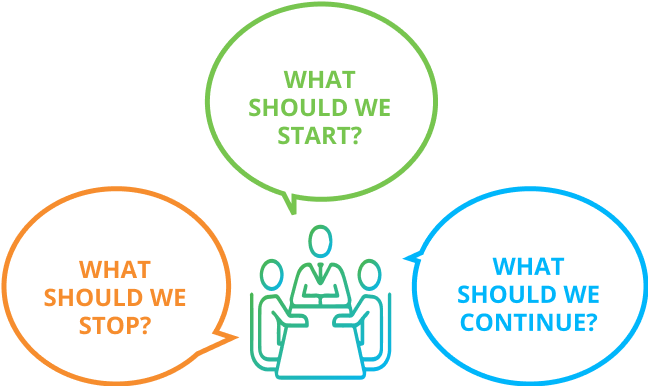
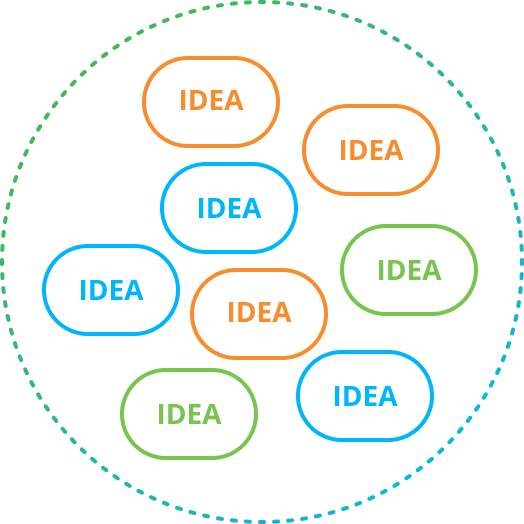
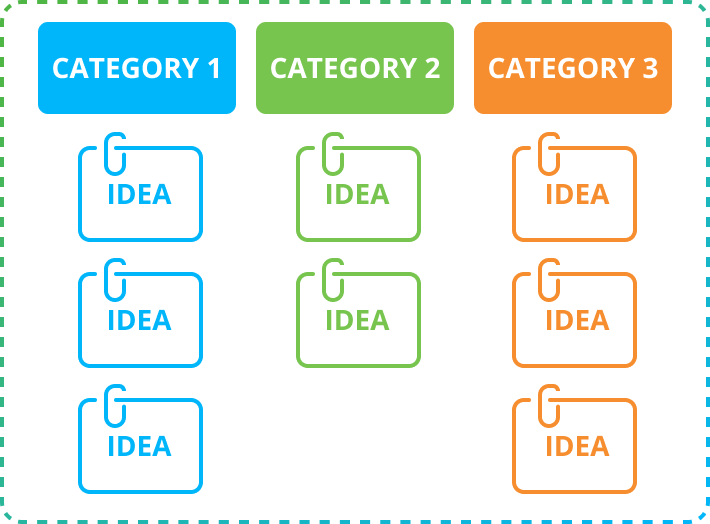
Throughout the brainstorm process, be sure to write down all the ideas that surface. Then, use an Affinity Diagram to help group ideas into common themes.

Reflect:
Think back to the challenge or decision to be made you identified in the previous module. Take time to brainstorm multiple options.
What themes do you see arising?
When you’ve brainstormed what you believe to be a good list of realistic alternatives, the next step is to evaluate the feasibility, risks, and implications of each one to determine which are a “go”, and which are a “no”.
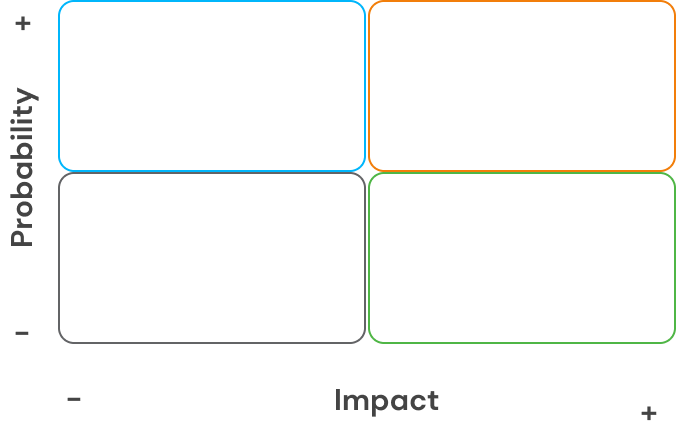
Almost every decision involves some degree of risk. Adopting a structured approach to analyzing threats and evaluating probability of adverse events can help take the emotion out of risk analysis. Once the potential risks have been identified, you can prioritize the risks using a Risk Impact/Probability Chart.
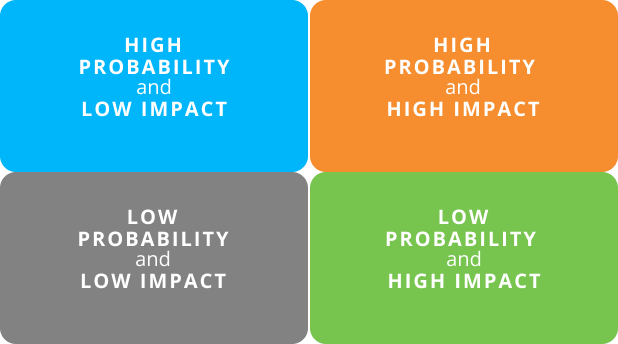
Risks in the bottom left corner are low level, and you can often ignore them.
Risks in the top left corner are of moderate importance – if these things happen, you can cope with them and move on. However, you should try to reduce the likelihood that they'll occur.
Risks in the bottom right corner are of high importance if they do occur, but they're very unlikely to happen. For these, you should do what you can to reduce the impact they'll have if they do occur, and you should have contingency plans in place just in case they do.
Risks towards the top right corner are of critical importance. These are your top priorities and are risks that you must pay close attention to.
Reflect:
Using your brainstormed list of possible decisions, consider the risks associated with each, and plot them on the Risk Impact / Probability Chart.
While you may not be able to identify all potential outcomes - only hindsight has 20-20 vision - taking time to carefully think through potential risks can help you clarify which solutions will deliver the outcomes closest to your desired results.
The next steps are to select and evaluate your top options, and then communicate your decision to the team and take action.
Hint: After completing the Risk Impact/Probability Chart, you may already have clarified your one good option, and thus will have an easy time selecting next steps. However, if you have multiple viable options, you may have to more closely evaluate your options.